
Quick Answer
Gel coat repair restores damage to a boat’s outer finish, such as scratches, chips, oxidation, and shallow surface cracks. Fiberglass repair addresses deeper damage involving the laminate, core material, hull, deck, floor, or transom. Some projects require both: the structural fiberglass is repaired first, followed by gel coat application to protect and refinish the surface.
What Is Gel Coat?
Gel coat is the smooth, colored exterior finish applied over a boat’s fiberglass construction. It creates the glossy surface most owners see and helps protect the underlying laminate from moisture, sunlight, and everyday wear.
Because gel coat is the outermost layer, it is often the first part of the boat to show damage. Common gel coat problems include:
- Light scratches and dock rash
- Small chips
- Oxidation and fading
- Shallow hairline cracks
- Dull or chalky surfaces
- Minor cosmetic imperfections
These issues may affect the appearance of the boat without weakening its structure. However, damaged gel coat should not always be ignored. Deep chips and cracks can eventually expose the fiberglass beneath the finish to water and additional deterioration.
JBRV provides gel coat repair and cosmetic boat restoration for scratches, cracks, chips, oxidation, fading, and other surface damage.
What is Fiberglass Repair?
Fiberglass repair restores the material beneath the gel coat that gives the boat its strength and shape. It may involve the fiberglass laminate, core material, hull, deck, floor, transom, stringers, or other structural components.
Fiberglass repair may be needed when there is:
- A deep gouge or puncture
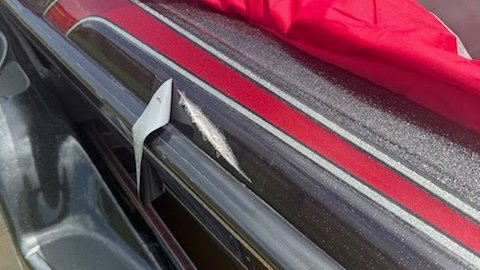
- Exposed or fractured fiberglass
- Delamination
- A soft deck or floor
- Structural cracking
- Significant impact damage
- Water-damaged core material
- Movement around the transom
- Damage below the waterline
Unlike a cosmetic repair, structural fiberglass work requires damaged material to be removed and rebuilt. New fiberglass and resin are layered into the area before it is shaped, sanded, and refinished.
Learn more about serious warning signs in How to Tell If Your Boat Has Structural Fiberglass Damage.
How Can You Tell Which Repair You Need?
The visible surface can provide clues, but it does not always reveal how deep the damage extends.
| Type of Damage | Likely Gel Coat Repair | Likely Fiberglass Repair |
| Light surface scratch | Yes | No |
| Oxidation or fading | Yes | No |
| Small shallow chip | Yes | Sometimes |
| Hairline surface crack | Often | Sometimes |
| Exposed fiberglass | No | Yes |
| Deep gouge or puncture | No | Yes |
| Soft deck or floor | No | Yes |
| Delamination or flexing | No | Yes |
| Structural hull or transom crack | No | Yes |
Cracks that widen, flex, return after repair, or appear near high-load areas deserve closer inspection. Our article about stress cracks vs. structural cracks in a fiberglass boat explains how the appearance and behavior of a crack can indicate deeper damage.
Why Some Repairs Require Both
Many fiberglass projects include gel coat work as the final step. For example, if a hull is punctured, the fractured laminate must first be removed and rebuilt. Once the structural repair is complete, gel coat is applied to protect the new fiberglass and blend the repair with the surrounding finish.
Applying gel coat over damaged fiberglass does not restore strength. Similarly, completing structural work without refinishing the surface can leave the repair exposed and visually unfinished.
The order matters: structural damage is corrected first, and the cosmetic finish is restored afterward.
What Happens During Each Repair?
A typical gel coat repair may involve cleaning and preparing the surface, opening damaged cracks, filling chips, matching the color, sanding, and polishing.
Fiberglass repair is more involved. The technician may need to:
- Inspect the surrounding laminate and core
- Remove fractured or water-damaged material
- Dry and prepare the repair area
- Replace weakened core material
- Apply new fiberglass and resin
- Fair and sand the surface
- Restore the gel coat or exterior finish
The Complete Guide to Boat Fiberglass Repair provides a fuller explanation of this process, common damage types, and repair considerations.
Schedule Boat Fiberglass or Gel Coat Repair
Choosing the correct repair begins with determining whether the damage is limited to the finish or extends into the boat’s fiberglass construction. Covering structural damage with a cosmetic repair may allow the problem to continue spreading beneath the surface.
JBRV provides both structural fiberglass boat repair and gel coat restoration for boats and personal watercraft throughout North Texas. Contact JBRV to have the damage evaluated and receive a repair recommendation based on the condition of your boat.
FAQs
Can gel coat repair fix a structural crack?
No. Gel coat can restore the exterior finish, but it cannot reinforce fractured fiberglass or damaged core material. The structural problem must be repaired first.
Is every crack in gel coat cosmetic?
No. Some cracks remain within the gel coat, while others develop because the fiberglass or supporting material beneath it is moving. Spreading or recurring cracks should be inspected.
What if fiberglass is visible through a scratch?
Visible fiberglass generally means the damage extends beyond the gel coat. The area may need fiberglass reinforcement before the finish is restored.
Can oxidation be repaired without fiberglass work?
Usually. Oxidation primarily affects the gel coat surface and may be corrected through restoration, polishing, or refinishing unless deeper damage is also present.
Which repair is more expensive?
Fiberglass repair generally costs more because it involves structural materials and additional labor. Pricing depends on the damage’s size, location, accessibility, and depth. Read How Much Does Boat Fiberglass Repair Cost? for more detail.