
Quick Answer
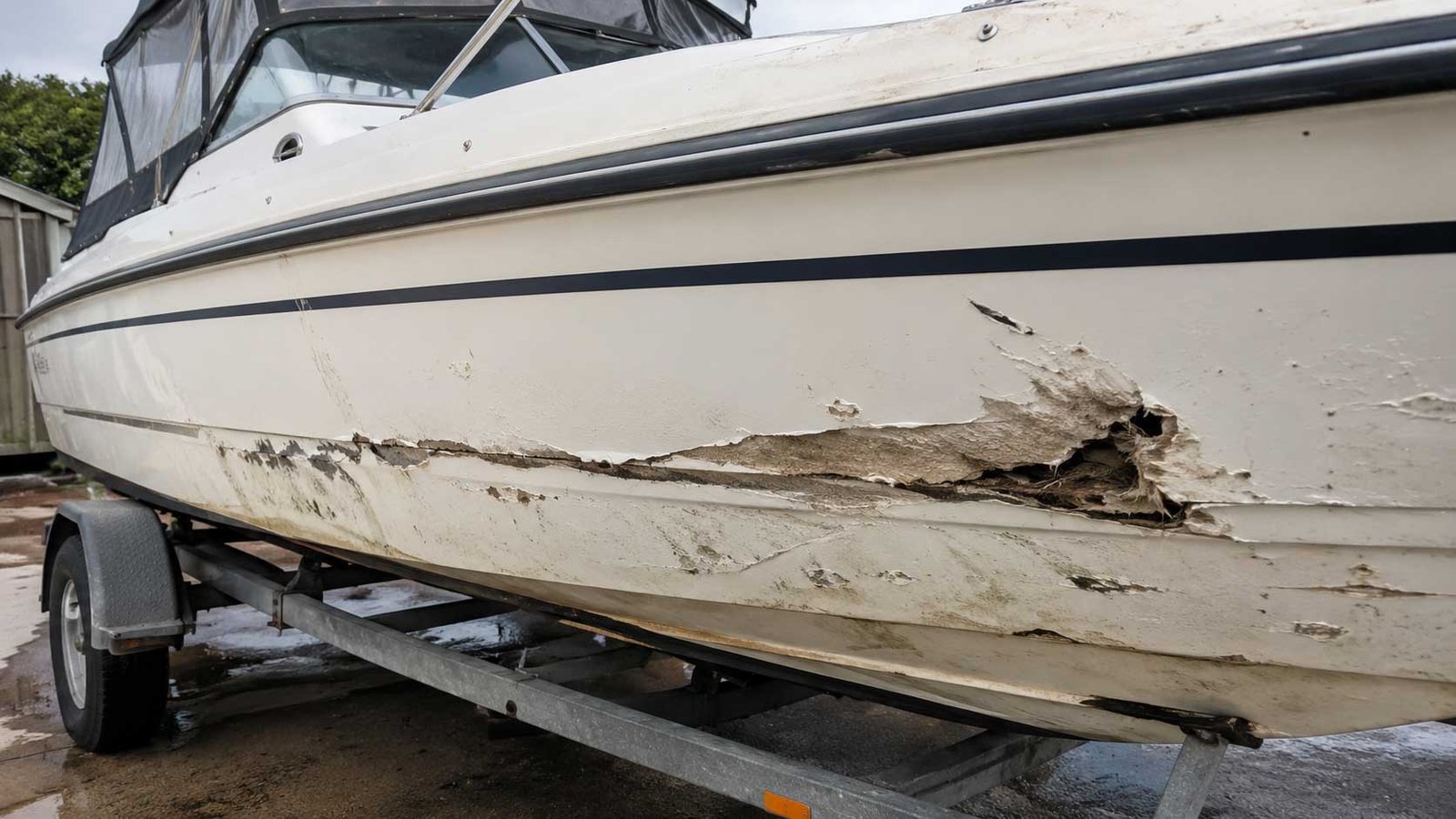
Structural fiberglass damage occurs when the fiberglass layers, core materials, or structural components of a boat become compromised. Common signs include soft spots in the deck or floor, large cracks in the fiberglass, visible hull damage, water intrusion, delamination, and areas that flex under pressure. While minor cosmetic cracks may not require immediate attention, structural fiberglass damage can worsen quickly and affect the safety, performance, and value of your boat. If you notice soft flooring, spreading cracks, or signs of moisture inside the fiberglass, professional structural fiberglass repair should be scheduled as soon as possible.
Not All Fiberglass Damage Is Cosmetic
One of the most common misconceptions among boat owners is that all fiberglass cracks and damage are simply cosmetic issues. While some scratches, chips, and gel coat imperfections only affect appearance, others indicate deeper structural problems that can compromise the integrity of the boat.
Fiberglass boats are incredibly durable, but they are not indestructible. Years of wave impact, rough water conditions, trailer stress, collisions, improper storage, and water intrusion can eventually weaken structural components. Left untreated, small issues can develop into expensive repairs that require extensive reconstruction.
Knowing how to recognize the warning signs of structural fiberglass damage can help you address problems early before they become major safety concerns. For a broader explanation of common damage types, professional repair methods, pricing factors, and prevention, read our Complete Guide to Boat Fiberglass Repair.
Soft Spots in the Deck or Floor
One of the clearest indicators of structural fiberglass damage is the presence of soft spots in the deck or floor.
When you walk across your boat, the flooring should feel solid and stable. If certain areas feel spongy, flex under your weight, or seem weaker than surrounding sections, there may be damage beneath the fiberglass surface.
Soft spots typically occur when water penetrates the fiberglass and reaches the core material beneath. Many boat decks contain plywood or composite core materials that provide strength and rigidity. Once moisture enters these materials, they can begin to deteriorate, rot, or separate from the fiberglass layers.
Common causes of soft spots include:
- Failed seals around hardware or fittings
- Cracked fiberglass surfaces
- Long-term water intrusion
- Improperly repaired damage
- Aging deck materials
Many boat owners assume a small soft spot is merely an inconvenience. In reality, it often indicates a much larger problem beneath the surface. The visible soft area may only represent a fraction of the damaged section hidden inside the deck structure. Learn more about the causes, warning signs, and repair process in What Causes Soft Spots in a Fiberglass Boat Deck or Floor?.
Understanding the Difference Between Stress Cracks and Structural Cracks
Not every crack in a boat’s fiberglass is cause for alarm. Some cracks are purely cosmetic, while others indicate significant structural issues.
Stress Cracks
Stress cracks are typically small, shallow cracks that form in the gel coat rather than the fiberglass itself. These are often caused by normal flexing, temperature changes, aging materials, or minor impacts.
Characteristics of stress cracks include:
- Hairline appearance
- Limited depth
- Located around corners or hardware
- No noticeable flexing in surrounding areas
- Primarily cosmetic concerns
While stress cracks should still be monitored and repaired to prevent moisture intrusion, they do not necessarily indicate structural damage.
Structural Cracks
Structural cracks extend beyond the gel coat and into the fiberglass layers that provide strength to the boat.
These cracks are often:
- Wider than hairline cracks
- Deep enough to catch a fingernail
- Accompanied by flexing or movement
- Located near high-stress areas
- Associated with impact damage or water intrusion
Structural cracks frequently appear around transoms, stringers, hull sections, and heavily loaded areas of the boat. These cracks should never be ignored because they often continue spreading over time.
Our guide to Stress Cracks vs. Structural Cracks in a Fiberglass Boat provides a side-by-side comparison and explains which crack characteristics indicate that professional inspection may be necessary.
Signs of Water Intrusion
Water is one of the biggest threats to the structural integrity of a fiberglass boat.
Fiberglass itself does not rot, but the materials beneath it often can. Once water finds a path into the boat’s core structures, it can cause widespread damage that may remain hidden for years.
Some common signs of water intrusion include:
- Soft flooring
- Bubbling fiberglass surfaces
- Discoloration around cracks
- Mold or mildew odors
- Excessive moisture inside compartments
- Water stains around fittings and hardware
- Unexplained increases in boat weight
In severe cases, water intrusion can cause delamination, which occurs when fiberglass layers separate from the underlying core material. Delamination weakens the structure and often creates hollow-sounding areas when tapped.
If your boat develops a musty smell or areas that sound hollow when lightly tapped, moisture may already be trapped within the fiberglass structure.
Watch for Changes Around the Transom
The transom is one of the most critical structural components on a boat. It supports the weight and thrust of the outboard motor and absorbs tremendous stress during operation.
Structural fiberglass damage in the transom often develops slowly and can become dangerous if ignored.
Signs of transom damage include:
- Cracks around motor mounting bolts
- Flexing when the motor is tilted
- Separation around seams
- Water leaking from mounting holes
- Visible stress cracks radiating outward
If the transom begins to fail, continued operation can place additional stress on the hull and increase repair costs dramatically.
Hull Damage May Be More Serious Than It Appears
Many boat owners inspect visible damage and assume that a small crack or impact mark only affects the outer surface.
Unfortunately, fiberglass hull damage can extend much deeper than what is visible from the outside.
A collision with a dock, submerged object, trailer component, or another vessel can fracture internal fiberglass layers even when exterior damage appears minimal. Repeated impacts from rough water can also weaken the hull over time.
Signs of structural hull damage include:
- Cracks below the waterline
- Areas that flex when pressure is applied
- Visible deformation
- Water intrusion near damaged sections
- Delamination around impact points
Any hull damage below the waterline should be evaluated promptly to prevent further deterioration. Because the appropriate repair depends on whether the damage is limited to the exterior finish or extends into the laminate, read Fiberglass Repair vs. Gel Coat Repair: What Does Your Boat Need? for a clearer comparison of the two services.
When Repairs Can No Longer Be Postponed
Many boat owners delay fiberglass repairs because the damage appears minor or because the boat is still functional. Unfortunately, structural fiberglass problems rarely improve on their own.
The following warning signs indicate that repairs should no longer be postponed:
- Soft spots continue growing
- Cracks are spreading or widening
- Water intrusion is present
- The hull is visibly damaged
- The transom flexes under load
- Delamination is occurring
- Structural areas feel unstable
The longer structural damage remains unaddressed, the more extensive and expensive repairs typically become. What starts as a localized repair can eventually require major reconstruction of decks, transoms, stringers, or hull sections.
Early intervention almost always results in a simpler repair process and lower overall costs. For more information about the variables that influence an estimate, including damage depth, location, accessibility, moisture, and structural involvement, read How Much Does Boat Fiberglass Repair Cost?.
Professional Structural Fiberglass Repair Restores Strength and Safety
Structural fiberglass repair involves much more than filling cracks or applying cosmetic coatings. Proper repairs require removing damaged materials, addressing underlying moisture issues, rebuilding structural components, and restoring the fiberglass layup to its original strength.
When completed correctly, professional repairs can restore both the appearance and structural integrity of your boat, allowing you to return to the water with confidence.
If you’ve noticed soft spots, growing cracks, water intrusion, or other signs of boat fiberglass damage, having the problem evaluated sooner rather than later can help prevent more extensive repairs down the road.
Schedule a Structural Fiberglass Inspection
If your boat is showing signs of structural fiberglass damage, don’t wait until a minor issue becomes a major repair. The team at JBRV provides professional boat fiberglass repair, hull repair, transom repair, and structural restoration services throughout North Texas. Whether you’re dealing with soft spots, water intrusion, stress cracks, or major fiberglass damage, we’ll identify the root cause and recommend the most effective repair solution. Contact JBRV today to schedule an inspection and get your boat back on the water safely.
FAQs
How do I know whether boat fiberglass damage is cosmetic or structural?
Cosmetic damage is generally limited to the outer gel coat and may appear as light scratches, small chips, oxidation, or shallow hairline cracks. Structural fiberglass damage extends into the laminate, core material, hull, deck, floor, transom, or another supporting component and may cause flexing, soft spots, spreading cracks, or water intrusion. Read our fiberglass repair vs. gel coat repair guide for a closer comparison.
Can a small crack indicate serious fiberglass damage?
Yes. The visible size of a crack does not always show how far the damage extends beneath the surface. Cracks that widen, return after repair, flex when pressed, appear below the waterline, or develop near the transom should be inspected for deeper structural damage. Learn more in our guide to stress cracks vs. structural cracks in a fiberglass boat.
Is a soft spot in a boat floor always caused by rot?
Not always, but water-damaged or deteriorated core material is a common cause. Delamination, crushed foam, weakened plywood, impact damage, or poor bonding between the fiberglass and core can also make a deck or floor feel soft. Our article on soft spots in fiberglass boat decks and floors explains what may be happening beneath the surface.
Is it safe to use a boat with suspected structural fiberglass damage?
The boat should remain out of the water when the damage involves a hull crack, puncture, active leak, unstable floor, flexing transom, or significant delamination. Waves, vibration, passenger weight, and engine forces can place additional stress on the weakened area and cause the damage to spread.
Can structural fiberglass damage be repaired?
Many hull, deck, floor, transom, and structural fiberglass problems can be repaired by removing compromised material and rebuilding the damaged area with new core material, fiberglass, and resin. The appropriate repair depends on the damage’s location, depth, moisture exposure, and surrounding condition. JBRV provides professional structural and fiberglass boat repair throughout North Texas.