
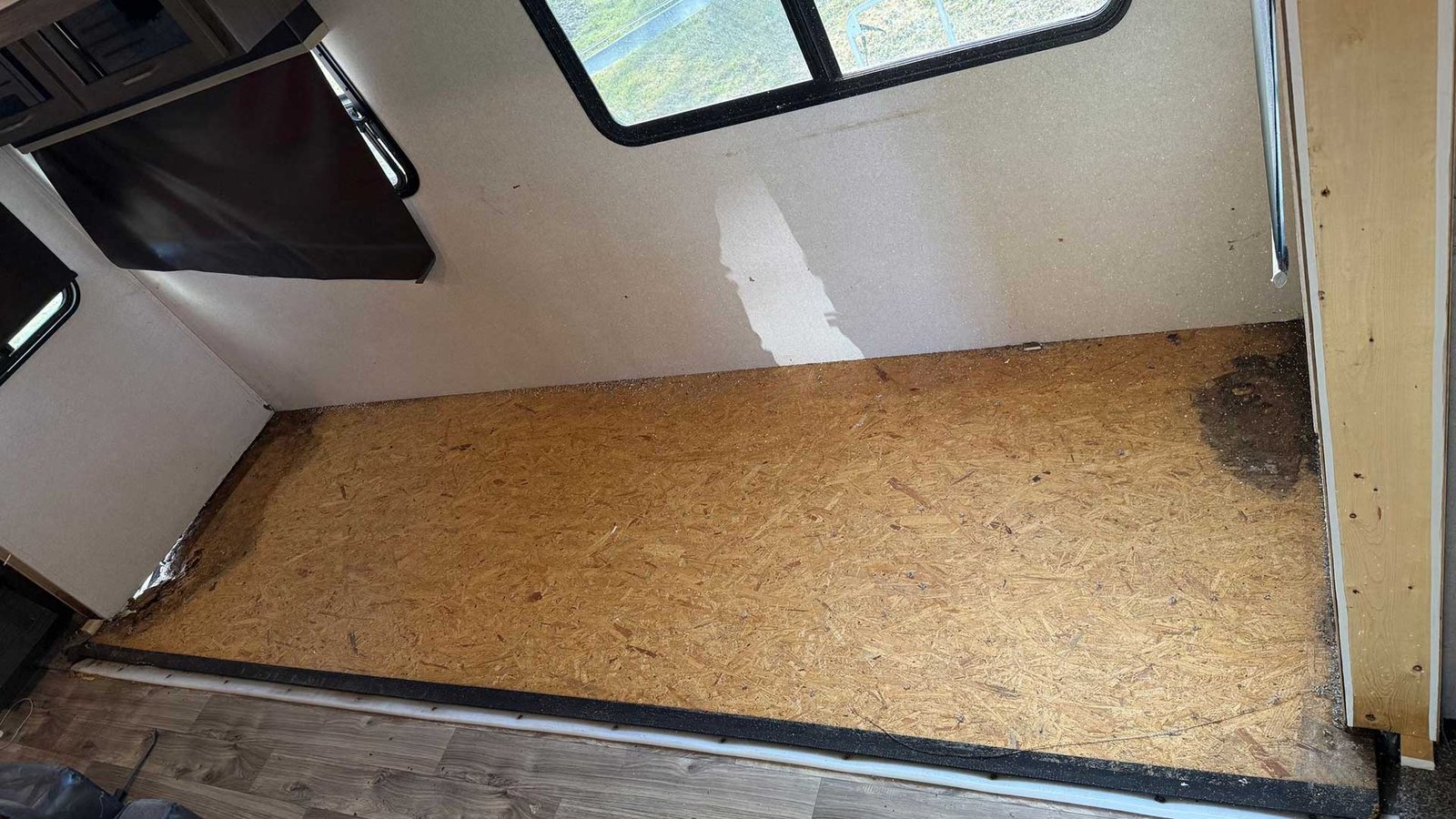
RV slide-outs are designed to expand your living space—but when the floor underneath starts to soften, sag, or rot, that convenience quickly turns into a serious structural problem. What starts as a small soft spot can spread across the entire slide-out, leading to costly repairs if not addressed early.
Understanding what causes slide-out floor damage—and what it takes to repair it—can help you act quickly and avoid much bigger issues down the road.
What Causes RV Slide-Out Floor Rot?
In most cases, a rotted slide-out floor isn’t caused by one major event. It’s the result of slow, consistent water intrusion that goes unnoticed until the damage becomes visible.
The most common causes include:
- Worn or cracked slide-out seals that allow water to seep in
- Improperly aligned slide-outs that don’t fully seal when closed
- Roof or wall leaks that travel downward into the floor structure
- Poor drainage or pooling water during heavy rain
- Neglected maintenance, especially on older RVs
Once moisture gets into the subfloor, it begins to break down the wood structure. Over time, this leads to soft spots, delamination, and eventually full structural failure.
Signs Your Slide-Out Floor Is Rotted
Catching the issue early can save thousands in repairs. Unfortunately, many RV owners don’t notice the problem until it’s already advanced.
Here are the most common warning signs to look for:
- A spongy or soft feeling when walking on the slide-out
- Visible sagging or dipping in the floor
- Cracking or peeling flooring materials
- Musty odors indicating trapped moisture
- Gaps forming between the slide-out and the main RV body
- Water stains near the edges of the slide
If you’re noticing any of these, it’s worth reading our full guide on RV Slide-Out Repair: Complete Guide to Common Problems, Costs, and Fixes to understand how this fits into the bigger picture.
How Bad Is It? Understanding Damage Levels
Not all slide-out floor damage is the same. The repair approach depends entirely on how far the rot has spread.| Damage Level | Description | Typical Repair Approach |
| Early Stage | Minor soft spots, no structural sag | Spot repair or sealing |
| Moderate Damage | Soft flooring with some flex or separation | Partial floor replacement |
| Severe Damage | Sagging, structural weakness, widespread rot | Full floor rebuild |
Can You Repair a Rotted Slide-Out Floor Yourself?
This is where many RV owners get into trouble.
At first glance, repairing a soft floor might seem like a manageable DIY project. But slide-out floors are part of a complex structural system, often involving:
- Steel support frames
- Electrical components
- Slide-out mechanisms
- Weight distribution systems
Attempting a repair without fully understanding the structure can lead to:
- Misalignment of the slide-out
- Additional water intrusion points
- Damage to motors or tracks
- Increased repair costs later
DIY vs Professional Repair
DIY may work if:
- The damage is very small and localized
- You have experience with structural repairs
- You’ve confirmed there’s no underlying water source
Professional repair is recommended if:
- The floor feels soft across a wide area
- There is visible sagging
- The slide-out no longer seals properly
- You suspect water damage has spread
If you’re unsure, it’s smart to compare your situation with our breakdown of DIY vs Professional RV Slide-Out Repair: What You Should (and Shouldn’t) Fix Yourself.
How RV Slide-Out Floor Repair Works
The repair process depends on the severity, but most professional repairs follow a structured approach.
Step 1: Full Inspection
Technicians identify:
- Source of water intrusion
- Extent of structural damage
- Condition of seals and slide components
Step 2: Slide-Out Stabilization or Removal
In many cases, the slide-out must be:
- Fully extended and supported
- Or partially/fully removed for access
Step 3: Removal of Damaged Materials
All compromised wood and materials are removed to prevent further spread.
Step 4: Structural Rebuild
This includes:
- Replacing subfloor materials
- Reinforcing structural supports
- Ensuring proper alignment
Step 5: Sealing and Prevention
New seals, barriers, and waterproofing measures are installed to prevent future damage.
How Much Does Slide-Out Floor Repair Cost?
Costs vary widely depending on the extent of the damage.
Typical Cost Ranges
Minor repairs: $300 – $800
Partial floor replacement: $1,500 – $3,500
Full slide-out floor rebuild: $3,000 – $6,000+
For a deeper breakdown, visit our full pricing guide: How Much Does RV Slide-Out Repair Cost?
The key takeaway is simple:
The longer you wait, the more expensive it gets.
How to Prevent Slide-Out Floor Damage
Once repaired, preventing future issues becomes critical.
Here are a few best practices:
- Inspect seals regularly for cracks or wear
- Keep slide-outs clean and free of debris
- Check for proper alignment when closing
- Avoid leaving slide-outs extended during heavy rain
- Address leaks immediately—no matter how small
Routine maintenance can dramatically extend the life of your slide-out and protect your investment.
When to Call a Professional
If your slide-out floor feels soft, looks uneven, or shows any signs of water damage, don’t wait for it to get worse.
Slide-out floor issues rarely stay contained. What starts as a small repair can quickly turn into a full rebuild if ignored.
Get Your RV Slide-Out Floor Repaired—Without the Hassle
Rotted slide-out floors don’t fix themselves—and quick patch jobs usually don’t last. The key is identifying the root cause and repairing it correctly the first time.
JBRV Mobile RV Repair comes directly to you, performs a full on-site inspection, and handles everything from minor repairs to full slide-out floor rebuilds—without the need to haul your RV to a shop.
Schedule your rotted slide-out floor repair today and protect your RV from further damage.